Slopes That Direct Water Away
Grading in Mount Vernon for drainage correction, driveway leveling, and surface preparation on residential and agricultural properties
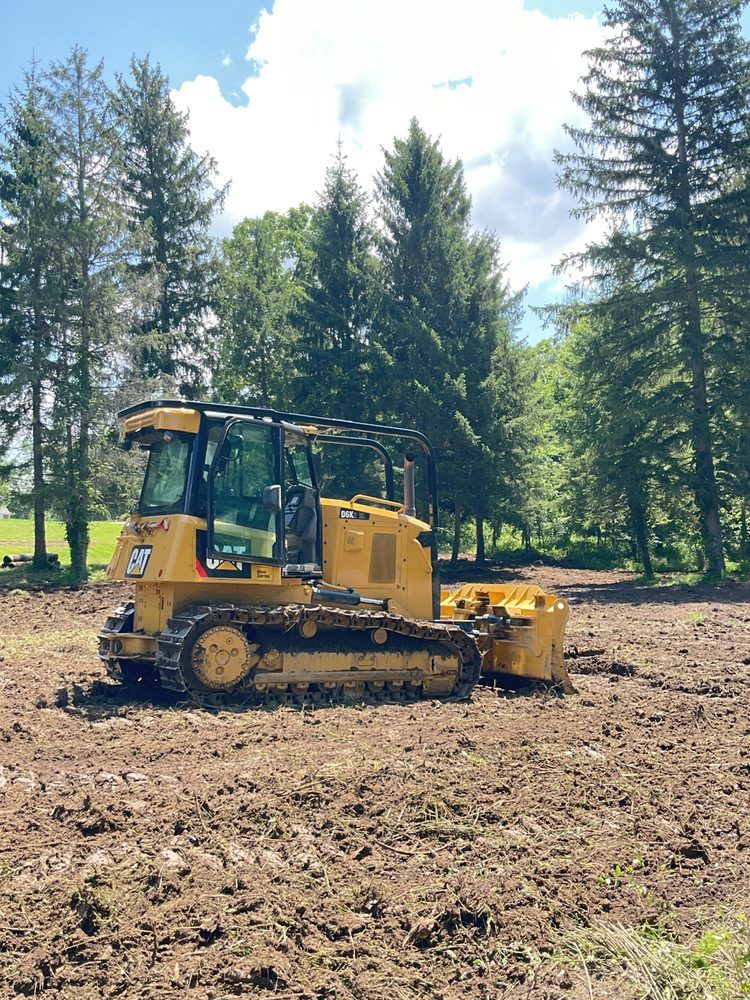
Standing water around buildings and uneven ground surfaces signal grading problems that worsen over time as erosion carves deeper channels and soil settles unevenly. Grading reshapes land by cutting high areas and filling low spots to create slopes that guide runoff away from foundations, driveways, and structures where moisture causes damage. Ridge Way Excavating grades properties throughout Mount Vernon using equipment that moves soil precisely, establishing drainage patterns that prevent pooling and erosion while improving usability for vehicles, equipment, and outdoor activities.
The process starts with identifying where water collects during storms and determining which direction slopes should run to move runoff toward drainage points or away from vulnerable areas. Equipment scrapes or fills soil to achieve gradual grades, typically one to two percent slope for paved surfaces and steeper angles for lawn areas. Ohio clay compacts differently than sandy loam, requiring operators to adjust blade depth and passes to avoid creating ruts or weak spots that reappear after equipment leaves.
Request a grading estimate to evaluate current drainage issues and discuss slope adjustments needed to eliminate standing water on your property.
Why Proper Slopes Work for Runoff Control
Grading removes irregularities that trap water by smoothing transitions between terrain features and creating consistent slopes that maintain momentum as water flows across surfaces. Precision work involves checking elevations repeatedly during grading to confirm slopes meet design targets without dips or humps that disrupt drainage. Finished grades tie into existing drainage structures like culverts, swales, or ditches so water exits the property without eroding soil or flooding low-lying areas.
Once grading work is complete, rainwater moves visibly across graded surfaces instead of pooling in depressions or soaking into soil near foundations. Driveways no longer collect puddles that freeze into ice patches during winter, and yard areas dry faster after storms because water flows toward planned drainage routes. Erosion slows along slopes where gullies previously formed, and equipment or vehicles travel across the property without getting stuck in soft, saturated ground.
Grading projects focus on reshaping existing soil and do not include adding gravel, asphalt, or other surface materials unless specified in the scope. Properties with significant elevation changes may need retaining walls or additional fill material to achieve functional slopes without excessive cuts. Final seeding or landscaping occurs separately after graded soil settles and compacts naturally through weather exposure.
What Property Owners Usually Ask
Questions about grading services often involve understanding how slope adjustments prevent water problems and what property conditions affect grading outcomes.
What slope percentage is needed to prevent water from pooling?
Residential grading typically requires one to two percent slope for drainage, meaning the ground drops one to two inches per ten feet of horizontal distance to keep water moving without creating erosion.
How does grading reduce erosion around structures?
Smooth, consistent slopes direct water flow along controlled paths rather than allowing runoff to concentrate into channels that cut through soil and expose foundations or utility lines.
Why does soil type affect grading results in Mount Vernon?
Clay-heavy soil compacts tightly but drains slowly, requiring steeper slopes or additional drainage features compared to sandy soil that absorbs water quickly but erodes easily under heavy flow.
When should grading occur to address ongoing drainage problems?
Grading works best during dry periods when soil is firm enough to support equipment without rutting, allowing precise shaping that holds up once rains return.
What site conditions complicate grading projects?
Properties with underground utilities, mature tree roots, or limited equipment access require careful planning to avoid damage and may need hand grading in confined areas.
Ridge Way Excavating evaluates drainage patterns and soil conditions before grading begins to design slopes that address specific water problems on residential, agricultural, and commercial properties. Reach out at (330) 275-0574 to schedule a property assessment and discuss grading solutions tailored to your site's topography and drainage challenges.