Foundations That Rest on Stable Ground
Site Prep in Mount Vernon for construction areas requiring excavation, clearing, and grading before building homes, barns, or outbuildings
Construction projects fail when site preparation overlooks drainage design, soil stability, or material removal needed to support structural loads. Site preparation combines clearing, excavation, and grading into a coordinated process that creates level building pads, establishes drainage paths, and exposes stable subgrade for foundations. Ridge Way Excavating prepares sites across Mount Vernon by removing unsuitable topsoil, reshaping terrain to match building plans, and coordinating with contractors to ensure work progresses on schedule once ground preparation finishes.
Site prep begins with staking building footprints and identifying where soil must be cut or filled to achieve target elevations shown on construction drawings. Equipment removes organic material and loose soil down to dense subgrade that resists settling under concrete or structural weight. Grading establishes slopes that direct water away from foundation areas, and access routes are smoothed for material deliveries and equipment staging throughout the construction phase.
Request a site preparation estimate to review excavation requirements and timeline coordination with your construction schedule.
The Difference Between Cleared Land and Construction-Ready Sites
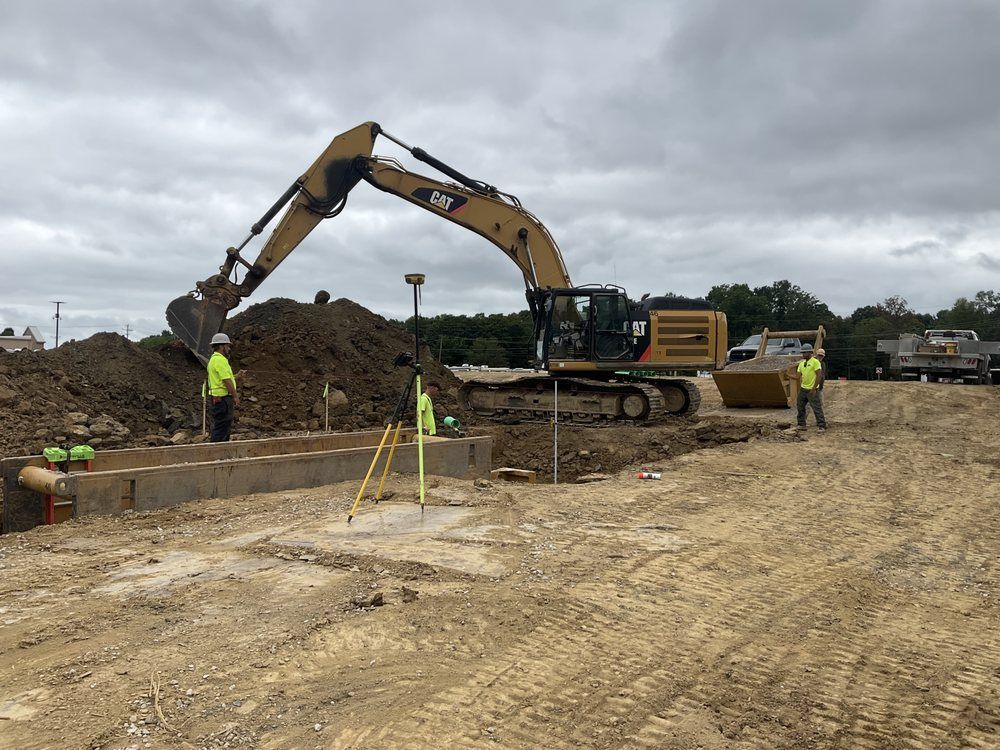
Site preparation goes beyond clearing vegetation by addressing soil conditions, compaction needs, and drainage integration that affect structural performance. Excavators dig utility trenches, shape building pads to precise elevations, and create temporary drainage during construction to prevent water from pooling in foundation areas before roofing is complete. Ground stabilization involves compacting fill material in layers and verifying soil density meets standards required for slabs or crawl spaces.
After site prep finishes, construction crews work on level platforms with defined perimeters that match permit drawings and engineering specifications. You see graded surfaces free of vegetation, rocks, and organic debris, with soil compacted to support formwork and concrete placement. Access roads remain stable under truck traffic, and staked corners indicate where walls and utilities will be positioned. Water drains predictably away from the building envelope, reducing delays caused by mud or standing water during framing and foundation work.
Site preparation includes initial grading and excavation but does not cover utility installation, which contractors handle separately based on project timelines and permit requirements. Final grading around completed structures often occurs after construction wraps to restore slopes disrupted by equipment movement. Properties with existing structures or mature landscaping require careful planning to protect features not included in the construction zone.
Questions Before Starting Your Project
Homeowners and builders preparing for new construction frequently ask about coordination, soil handling, and how site prep affects later project phases.
What coordination happens between site prep and other contractors?
Excavation and grading occur before foundation crews arrive, with timing planned so utility contractors can trench after rough grading without disrupting building pad stability.
How is unsuitable soil identified during site preparation?
Soil with high organic content, excessive moisture, or loose texture gets removed because it compresses unpredictably under structural loads, causing foundations to settle unevenly over time.
Why does site prep include temporary drainage measures?
Excavated areas collect rainwater during construction, so temporary berms and swales keep building pads dry until permanent drainage systems and roofing are installed.
When should site prep occur relative to permit approvals?
Excavation starts after permits are issued and surveying confirms building locations, ensuring work matches approved site plans and avoids setback violations.
What site features in Mount Vernon complicate preparation work?
Properties with bedrock near the surface, high water tables, or slopes exceeding ten percent require additional excavation or fill material to create stable building platforms.
Ridge Way Excavating coordinates site preparation with builders, surveyors, and inspectors to keep projects moving without delays caused by incomplete ground work. Call (330) 275-0574 to discuss your construction timeline and schedule site prep services tailored to your project requirements.