Usable Space Where Brush Once Stood
Land Clearing in Mount Vernon for overgrown parcels requiring preparation before construction, farming, or property access improvements
Overgrown properties accumulate brush, saplings, and invasive vegetation that block access and limit usable acreage for building or agricultural purposes. Ridge Way Excavating clears land by removing trees, stumps, undergrowth, and debris, opening space for future development or restoring areas that have become inaccessible due to neglect. Equipment cuts through dense growth, grinds stumps below grade, and piles material for removal or burning where regulations permit, leaving ground ready for grading or immediate use.
Clearing involves assessing which vegetation requires removal based on project goals—total clearing for building sites versus selective removal to maintain certain trees or natural barriers. Machinery handles large timber and root systems that manual labor cannot address efficiently, working through wooded sections or overgrown fence lines. Cleared material gets sorted for disposal, with usable wood separated from brush and organic debris hauled off-site or chipped for mulch.
Arrange a land clearing consultation to walk the property and identify which areas need clearing for your intended improvements.
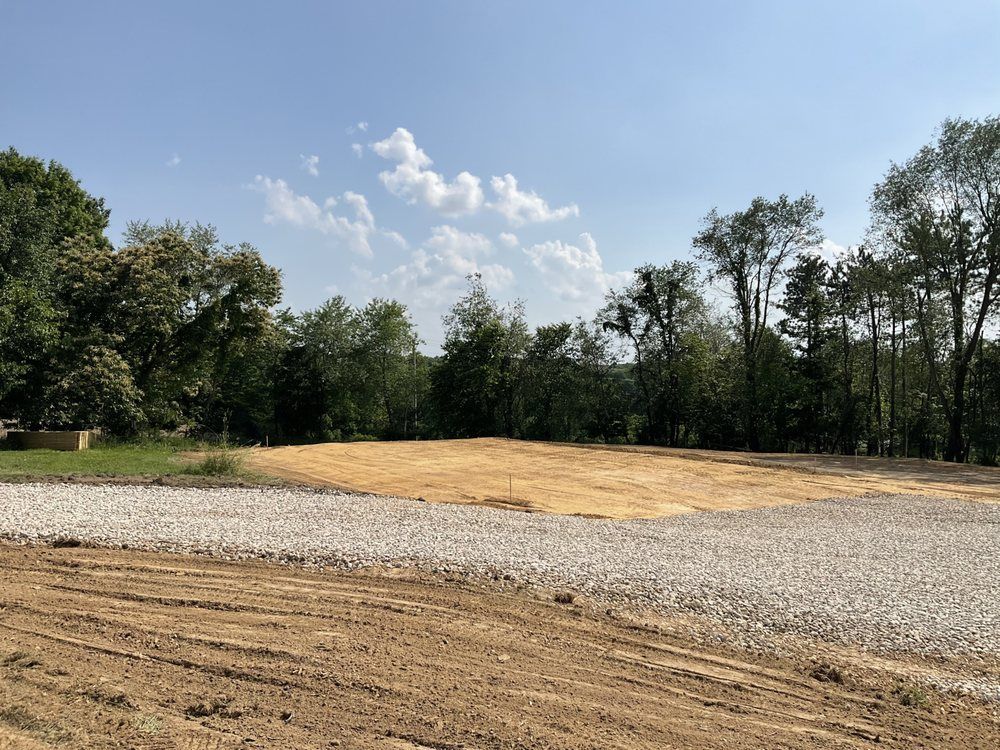
What You Notice Once Clearing Is Finished
Land clearing removes standing vegetation and grinds stumps flush with surrounding soil, eliminating obstacles that interfere with equipment movement or construction layouts. Tractors and excavators push debris into piles for organized disposal, and ground surfaces are left exposed for grading or seeding. Properties with years of unchecked growth see dramatic changes in visibility and access once clearing finishes.
Once clearing wraps, you see open ground where thick brush previously made walking or vehicle access impossible. Fence lines become visible again, property boundaries are easier to identify, and equipment can navigate across the land without obstruction. Sunlight reaches soil that was shaded for years, allowing grass or crops to establish where undergrowth once dominated. Cleared parcels reveal topography hidden beneath vegetation, making it easier to plan drainage, roads, or building placements.
Clearing projects focus on vegetation and debris removal but do not include grading or excavation unless specified, so uneven terrain remains until follow-up dirt work occurs. Stump grinding depth depends on future land use—deeper grinding for areas receiving structures or driveways, shallower removal for pastures or wooded buffers. Properties with extensive clearing needs may require multiple equipment passes and debris haul-offs, extending project timelines based on acreage and vegetation density.
Answers to Frequent Service Questions
Property owners preparing land for construction or agricultural use often have questions about debris handling, stump removal depth, and project timing.
What happens to trees and brush removed during clearing?
Material is either hauled off-site to disposal facilities, burned in controlled piles where local regulations allow, or chipped into mulch depending on volume and landowner preference.
How deep are stumps ground below the surface?
Stumps are typically ground six to twelve inches below grade for areas receiving grass or gravel, and deeper for sites where concrete slabs or building foundations will rest on cleared ground.
Why does clearing improve property usability beyond just appearance?
Removing vegetation eliminates fire hazards from dead wood, reduces pest habitat like rodents and ticks, and allows landowners to assess soil conditions and drainage patterns hidden under growth.
When is the best time to schedule land clearing in Mount Vernon?
Late fall through early spring allows easier debris burning when fire risk is lower, and frozen or dry ground supports heavy equipment without excessive rutting in wet soil.
What site conditions affect how long clearing takes?
Properties with large hardwood trees, dense root systems, or steep slopes require more equipment time than flat parcels with primarily brush and saplings.
Ridge Way Excavating handles residential, agricultural, and undeveloped parcels throughout Mount Vernon where access and vegetation density vary widely. Contact the team to schedule a property walkthrough and receive a detailed clearing estimate based on current site conditions.