Ground That Supports Long-Term Development
Mass Excavation and Dirt Work in Mount Vernon for building pads that prevent settling and drainage systems that redirect water away from structures
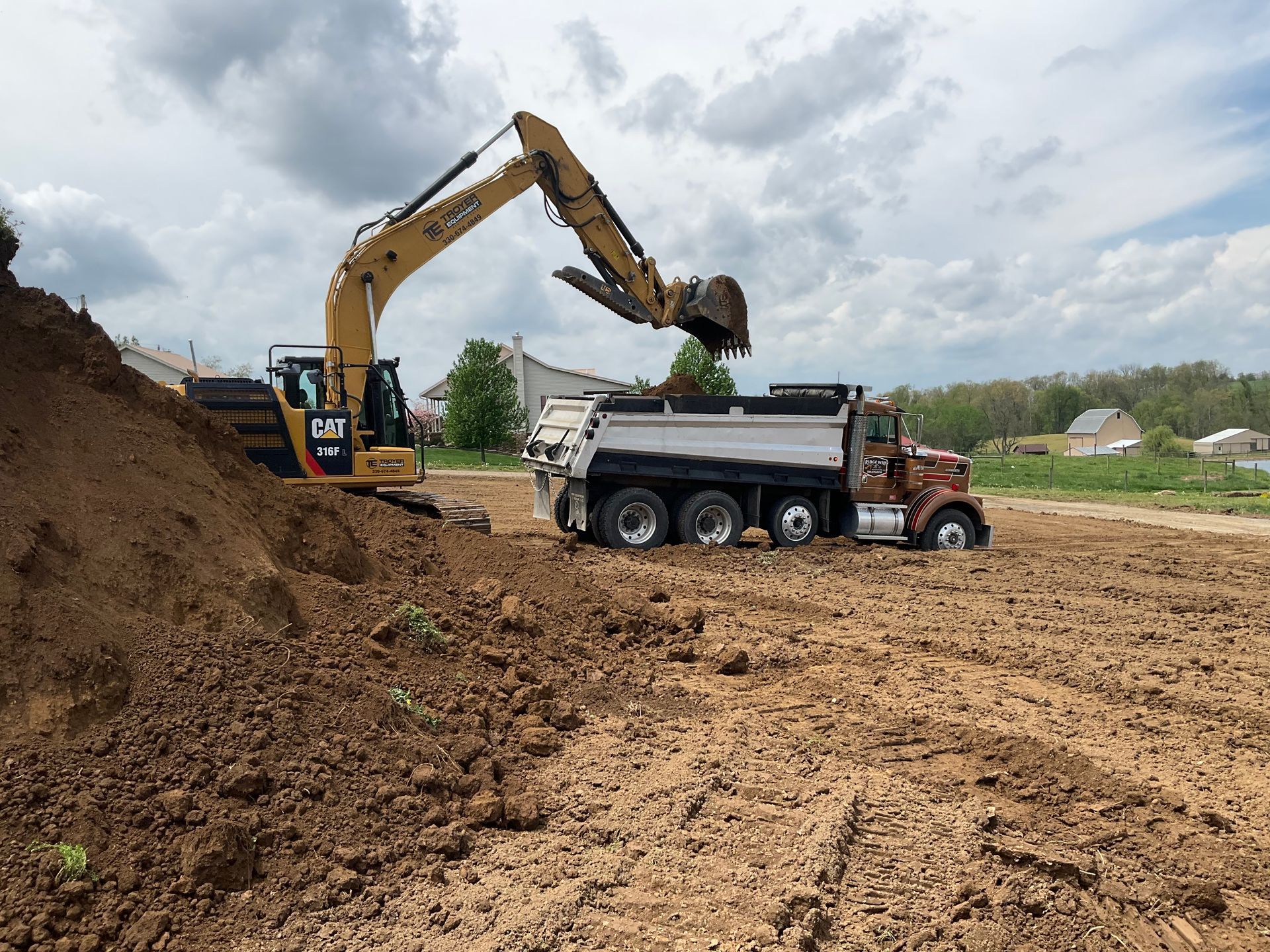
Ridge Way Excavating handles mass excavation and dirt work across Mount Vernon when properties require reshaping for construction, drainage correction, or land development. The service involves moving substantial volumes of soil to create stable building platforms, redirect surface water, and prepare uneven terrain for future use. Heavy equipment operates on rural acreage and residential lots where manual grading cannot achieve the depth or precision needed for foundations, barns, or agricultural improvements.
Excavation starts with evaluating existing soil composition and identifying where material needs removal or redistribution to support structural loads and prevent water from pooling near buildings. Equipment cuts into compacted layers, relocates soil to low areas, and shapes slopes that guide runoff toward drainage points. Ohio clay content affects how soil compacts after movement, requiring adjustments in grading depth and equipment passes to achieve density that resists future settling.
Schedule a site evaluation to determine excavation depth requirements and soil movement strategies for your property layout.
What Proper Site Preparation Requires
Mass excavation removes vegetation, topsoil, and unsuitable material down to stable subgrade before placing structural fill or pouring concrete. Equipment operators work in passes, compacting soil in lifts to prevent voids that cause sinking after construction begins. Laser-guided grading ensures slopes meet design specifications for drainage, keeping water movement predictable across the finished surface.
Once excavation and grading finish, the ground sits level with defined slopes that channel water away from building areas. You notice consistent elevation across pads where structures will rest, eliminating low spots that collect moisture during rain. Access routes become navigable for delivery trucks and construction equipment, and the property outline matches site plans submitted for permits.
Excavation projects include debris removal from the work area, though tree removal and stump grinding often occur as separate phases depending on property clearing needs. Final grading may require additional passes after utility installation if trenching disrupts earlier soil work. Projects on uneven terrain take longer due to the volume of material requiring relocation to achieve target elevations.
What Landowners Usually Ask
Questions about excavation and dirt work come up frequently when property owners plan construction or address drainage problems around existing buildings.
What happens to the soil removed during excavation?
Soil gets stockpiled on-site for reuse in grading or hauled off-property if unsuitable for fill, depending on clay content and moisture levels that affect compaction quality.
How does grading prevent water from reaching building foundations?
Slopes are cut at angles that direct surface runoff toward swales or drainage structures, keeping water moving away from concrete slabs and basement walls during storms.
Why does soil need compaction after excavation?
Loose soil settles unevenly under structural weight, causing cracks in foundations and slabs, so equipment compacts fill material in controlled layers to eliminate air pockets.
When should excavation occur relative to other construction phases?
Excavation happens before utility trenching and foundation work, allowing contractors to access stable, level ground that matches elevation requirements in building plans.
What site conditions in Mount Vernon affect excavation planning?
Clay-heavy soil requires more drying time before compaction achieves proper density, and properties with bedrock near the surface need alternative grading strategies to avoid blasting or excessive equipment wear.
Ridge Way Excavating brings equipment suited to rural properties and agricultural sites where access roads may not support standard construction machinery. Arrange a consultation to review grading plans and discuss soil conditions specific to your acreage.