Access Routes Built to Last Seasons
Gravel Driveway in Mount Vernon for residential properties, rural access roads, and driveways requiring improved drainage and compaction
Ohio weather cycles between freeze-thaw heaving in winter and summer storms that wash out poorly drained driveways, leaving ruts, potholes, and mud that trap vehicles during wet stretches. Gravel driveway installation by Ridge Way Excavating addresses these conditions by grading for positive drainage, compacting base layers, and spreading angular stone that locks together under traffic rather than shifting sideways like rounded river gravel. The work begins with removing soft topsoil or old material that no longer drains, then building up the roadbed in lifts that shed water to ditches or vegetated edges.
Base stone is laid first—typically larger, crushed aggregate that resists compression and provides structural support. A surface layer of smaller gravel follows, graded to crown in the center so water runs to the sides instead of pooling in wheel tracks. Compaction happens between lifts using a roller or vibrating plate, depending on driveway width and equipment access.
Arrange a site evaluation to review current driveway condition, drainage patterns, and gravel depth needed for your property use.
What Proper Grading and Compaction Accomplish
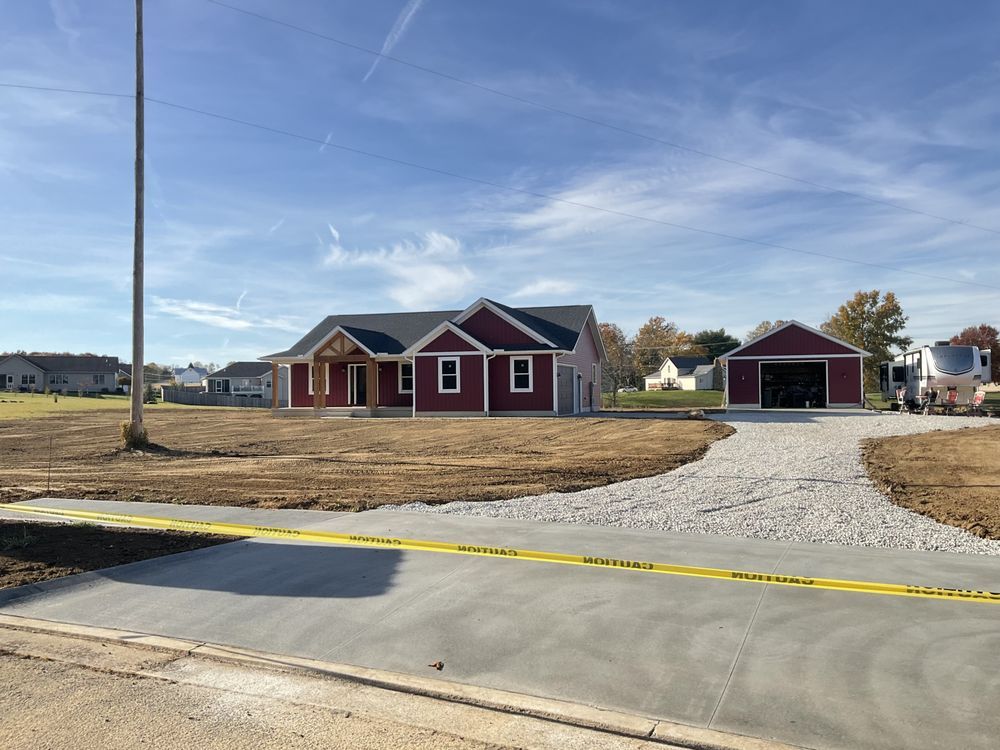
Driveways fail when water sits on the surface, softening subgrade and allowing traffic to push gravel into the mud below. Grading establishes a cross-slope that moves water off the driving surface before it soaks in, while compaction increases stone density so the driveway resists rutting under loaded trucks or repeated daily traffic. Ridge Way Excavating uses motor graders or excavators with tilt buckets to shape long rural driveways, ensuring consistent crown and side slopes that function across the entire length.
Once the work is complete, you'll notice vehicles no longer sink during rain, mud stops tracking onto paved roads, and the driveway maintains a firm surface year-round. The stone stays in place instead of migrating to the edges, and water drains quickly enough that freeze-thaw cycles cause minimal heaving. Maintenance involves occasional regrading to restore crown and adding stone every few years as traffic grinds down the surface layer, but the base remains stable if initial compaction was done correctly.
New installations, driveway extensions, and full reconstructions are all managed with attention to drainage design and material selection suited to traffic loads. Properties with steep grades receive additional grading consideration to prevent washouts, and long rural driveways are crowned in sections to avoid creating a single long slope that channels water into erosive flows.
Answers Property Owners Need Before Installation
Driveway projects in Mount Vernon raise questions about material choices, preparation steps, and long-term maintenance before work begins.
What type of gravel works best for driveways?
Angular crushed stone such as limestone or slag provides better compaction and interlock than rounded gravel. Base layers use larger stone for strength, while surface layers use smaller stone that packs tightly and resists displacement under tires.
How deep does a gravel driveway need to be?
Most residential driveways require six to eight inches of compacted gravel over stable subgrade. Driveways with heavy truck traffic or soft soils may need deeper base layers or geotextile fabric to prevent mixing between stone and subgrade.
How is drainage managed during installation?
Ridge Way Excavating grades driveways to crown in the center and slope toward ditches or grass edges, preventing water from ponding. Culverts are installed or cleaned where driveways cross natural drainage paths, and grading extends beyond the driveway edge to direct runoff away from the roadbed.
When should gravel driveways be refreshed?
Driveways typically need additional stone every three to five years as traffic grinds down the surface. Regrading restores crown and smoothness, and new stone replaces material lost to displacement or embedding into the subgrade.
Can existing driveways be repaired without full replacement?
Yes, if the base is still intact, repairs involve regrading the surface, adding new stone, and recompacting to restore drainage and firmness. Full replacement is needed only when the subgrade has failed or drainage issues have compromised the entire roadbed.
Ridge Way Excavating provides gravel driveway quotes based on site conditions, access length, and traffic demands specific to your property. Reach out at (330) 275-0574 to schedule a site evaluation and discuss material options that match your driveway's use and terrain.